Is Com.bot Good for Facebook Messenger Broadcasts? An Honest 2026 Review
Facebook Messenger broadcasts can get your Page restricted if you send them wrong. Many platforms promise bulk messaging, then leave you guessing which contacts actually opted in.
This review covers how Com.bot handles Messenger broadcasts, from bulk sending and the visual bot builder to pricing, Meta partnership, and enterprise security. By the end, you will know whether Com.bot fits your broadcast needs in 2026 or whether another tool serves you better.
What Is Com.bot? The AI Unified Business Communication Platform
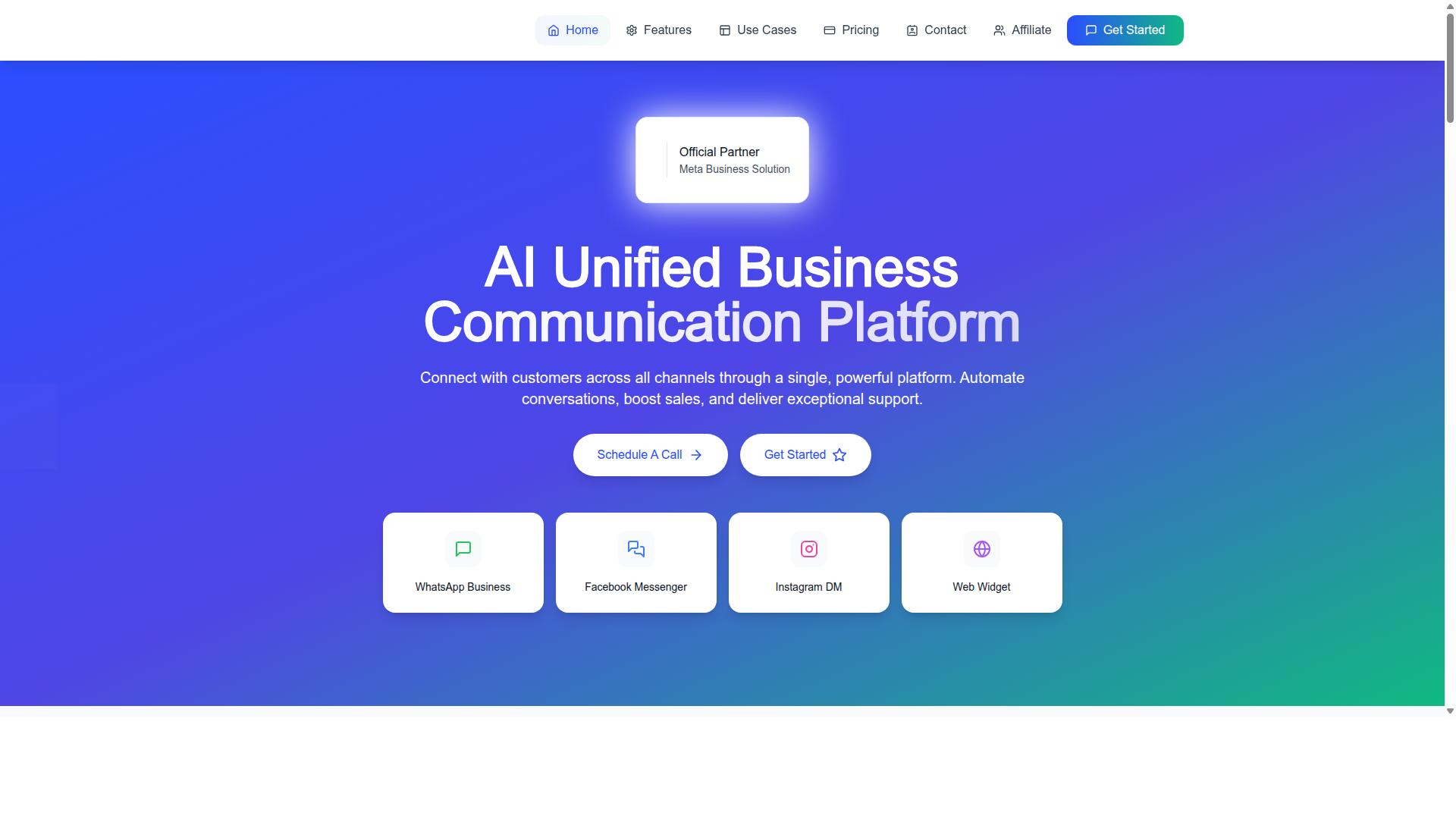
Com.bot is an AI Unified Business Communication Platform that consolidates WhatsApp Business, Facebook Messenger, Instagram DM, and Web Widget into a single interface. Instead of juggling four separate inboxes, teams manage every customer conversation from one place.
The platform is built around two core ideas: connecting channels and automating conversations. That combination matters for any business running broadcast messaging, because a message sent on one channel and a reply received on another should feel like one continuous conversation to the customer.
Com.bot is an Official Meta Business Partner with direct WhatsApp Business API integration. That status is relevant to this review because it speaks to how the platform connects with Meta's messaging infrastructure, the same infrastructure that governs Facebook Messenger broadcasts.
Ownership sits with Com Bot AI Limited, which owns and manages the platform. For readers evaluating tools for a 2026 review, that clarity of ownership is a small but useful signal when judging whether a vendor is established.
This article focuses on one question: is Com.bot good for Facebook Messenger broadcasts? The sections ahead look at who the platform serves, how broadcast messaging fits into its channel strategy, and where its strengths and limits sit.
Who Com.bot Serves and Where It Operates
Com.bot serves a diverse global clientele, including small businesses, enterprises, and government bodies across more than 50 countries. That range says something about the platform's design: it has to work for a five-person shop and a public-sector contact center at the same time.
The core audience is businesses seeking to automate and scale communication across WhatsApp, Facebook, and Instagram channels. These are teams that have outgrown manual replies but still want conversations to feel personal.
Government bodies and enterprises appear in that audience too, particularly where multi-channel customer support is a requirement rather than a nice-to-have. The same organizations often need bulk messaging, order updates, and payment collection alongside everyday support.
Those needs shape what a broadcast tool must handle:
- Bulk messaging to large contact lists without losing message quality
- Order updates delivered where customers already spend time
- Payment collection inside the conversation flow
- Support across multiple channels from one dashboard
Operating in more than 50 countries also means the platform has to accommodate different languages, time zones, and messaging habits. For a Facebook Messenger broadcast, that geographic spread is practical: audiences are rarely in one place, and scheduling has to reflect that.
For this 2026 review, the takeaway is simple. Com.bot targets organizations that treat messaging as a primary channel, not an afterthought, and it builds for scale from the start.
Is Com.bot Good for Facebook Messenger Broadcasts? The Direct Answer
Yes, Com.bot is a robust solution for Facebook Messenger broadcasts, but its effectiveness depends on how well you leverage its features and comply with Meta's policies. For most businesses running Messenger marketing at scale, it earns a clear positive verdict in this 2026 review.
The platform is built around multi-channel support, automation, and compliance tools. That combination matters because broadcast messaging on Messenger is not simply a matter of sending a message to everyone on your contact list.
Meta enforces strict rules, and a tool that ignores them puts your Facebook page at risk. Com.bot is designed with those rules in mind, which is the core reason it holds up well for this use case.
Where Com.bot stands out is its ability to handle bulk messaging while respecting the 24-hour rule and message tags. The 24-hour rule limits how you can message subscribers outside an active conversation window. Message tags provide a compliant path for certain message types, such as updates tied to a recent transaction or a confirmed event.
A capable broadcast tool must operate inside those boundaries rather than around them. Com.bot's approach keeps promotional messages and subscription messaging within Meta's framework, which protects deliverability over the long term.
This is not a minor detail. Pages that ignore the rules can see their delivery rate collapse or face restrictions. A tool that builds compliance into the workflow gives you a durable channel instead of a short-lived one.
That said, the platform is not a magic switch. Results depend on proper audience segmentation and opt-in practices.
Broadcasts sent to a poorly organized contact list underperform, no matter how good the software is. Subscribers who never agreed to hear from you are also a compliance risk, not just a performance problem.
Businesses that segment their audience and collect genuine opt-ins tend to see stronger engagement. Those that treat a broadcast like a blunt mass messaging tool often see the opposite.
The honest assessment comes down to fit. Com.bot is a strong choice for teams that want to run Messenger broadcasts as part of a broader customer engagement strategy. It is less suited to anyone looking to bypass Meta's policies or blast messages without a subscriber base.
Used correctly, it supports the full broadcast lifecycle, from scheduling and drip campaigns to sequences that respond to subscriber behavior. That range is what separates a real broadcast platform from a simple sending tool.
For this 2026 review, the verdict is favorable with one condition attached. Treat compliance and segmentation as part of your strategy, not as optional extras, and Com.bot delivers on what a Messenger broadcast tool should do.
How Com.bot Handles Facebook Messenger Broadcasts
Com.bot streamlines Facebook Messenger broadcasts through a combination of bulk messaging capabilities, a unified team inbox, and visual automation tools. Instead of juggling separate apps for each social channel, teams work from one dashboard that connects Facebook, Instagram, and WhatsApp side by side.
That structure matters because broadcast messaging on Messenger is not simply a matter of typing a message and hitting send. Meta enforces specific rules about who you can message, when you can message them, and what kind of content is allowed. A platform built around those rules saves marketers from costly trial and error.
Com.bot approaches Facebook Messenger broadcasts from three angles. Bulk Messaging handles the sending side, the Unified Team Inbox handles the conversations that follow, and the Visual Bot Builder handles the automated replies that keep engagement moving when no agent is available.
This section breaks down how each piece works, where the platform fits well for a Facebook page, and what limitations businesses should understand before committing to a broadcast strategy in 2026.
Bulk Messaging and Multi-Channel Support in One Inbox
Com.bot's unified team inbox allows you to manage and send bulk messages across Facebook Messenger, WhatsApp, and Instagram from a single dashboard. Rather than switching between tabs to check each channel, agents see incoming conversations in one queue and can respond without losing context.
The Bulk Messaging feature supports sending broadcast messages to segmented lists drawn from your contact list. You can schedule sends for a specific time, target a subscriber group, and review delivery results afterward. For teams running promotions, order updates, or announcements, this removes the manual work of exporting contacts and messaging them one by one.
Compliance is the part many businesses underestimate. Meta's 24-hour rule means you can only send standard promotional messages within 24 hours of a user's last interaction. Outside that window, you need an approved message tag or subscription messaging permission. Com.bot's broadcast tools are built to work within those constraints, which helps protect your Facebook page from restrictions.
Multi-channel support extends beyond Messenger. Com.bot also offers WhatsApp Business API integration and Instagram connectivity, so a single broadcast strategy can reach audiences wherever they prefer to talk. Additional capabilities include:
- Order Updates and Notifications for transactional messaging
- Payment Collection and Native Payments for WhatsApp transactions
- Customer Support workflows handled inside the shared inbox
- Team Collaboration with role-based access for larger teams
For a business running Messenger marketing alongside other channels, keeping everything in one place reduces the risk of missed messages and inconsistent replies.
Visual Bot Builder and Automation for Messenger Conversations
Com.bot's drag-and-drop visual bot builder enables you to create chatbots that automate responses and nurture leads on Facebook Messenger without coding.
Pre-built templates give you a starting point for common scenarios. From there, you can design flows that match your brand voice and add branching logic based on how a subscriber responds.
Automation in Com.bot runs on triggers, conditions, and actions. A trigger might be a new message or a keyword, a condition might check which segment the contact belongs to, and an action might send a reply, tag the contact, or hand the conversation to a human agent. The Automation Builder connects with 1000+ integrations, which means Messenger conversations can feed into the rest of your stack rather than sitting in isolation.
Practical uses for a Facebook page include:
- Welcome messages that greet new subscribers and set expectations
- FAQ bots that answer common questions instantly
- Drip campaigns and sequences that deliver content over time
- Smart Chatbots with AI and natural language processing to interpret user intent
NLP and AI chatbot capabilities help the system understand what a person is actually asking, not just match exact keywords. That improves the odds of a helpful automated reply and reduces the volume of conversations that need a human to step in.
When combined with broadcast messaging, these flows let you send a promotional message and then handle every follow-up question automatically, which supports stronger engagement and a better conversion rate over time.
Key Features That Make Com.bot Stand Out
Beyond broadcast messaging, Com.bot offers a suite of features that enhance customer engagement and operational efficiency. For a Facebook Messenger broadcast strategy to work, the underlying platform has to do more than push messages out the door. It needs to deliver reliably, connect with the tools a business already uses, and protect customer data at every step.
Com.bot checks each of those boxes. The platform is an Official Meta Business Partner, a status that matters for any brand running Messenger marketing at scale. It also carries a track record that few chatbot platforms can match: 23,000+ active customers, 500+ global partners, and 100+ government bodies relying on it.
Those numbers point to something important for a 2026 review. A tool trusted by government agencies and thousands of businesses is unlikely to be a fly-by-night operation. The sections below break down the three pillars behind that trust: real-time delivery, a broad integration ecosystem, and enterprise-grade security.
Real-Time Delivery, 1000+ Integrations and Enterprise Security
Com.bot ensures your messages are delivered instantly, integrates with over 1000 third-party tools, and protects data with enterprise-grade security. Speed matters in broadcast messaging because a delayed promotional message can miss its moment entirely. Real-time message delivery means campaigns reach subscribers without lag, and the analytics dashboard lets you track delivery rate and open rate as results come in.
Scale is the other half of the delivery story. Com.bot processes 25M+ messages per day and has powered 100K+ bots created on the platform. That volume shows the infrastructure holds up when a Facebook page sends mass messaging to a large contact list, whether it is a one-off broadcast or a scheduled drip campaign.
On the integration side, Com.bot connects with Zapier, APIs, and webhooks, along with popular CRM systems. This matters for Messenger marketing because your broadcast data should not live in isolation. A new subscriber captured through a Messenger flow can sync to your CRM, trigger a follow-up sequence, and feed your audience segmentation rules without manual work.
Security rounds out the feature set. Com.bot uses end-to-end encryption and complies with data protection regulations, with role-based access controls so team members only see what they need. For businesses handling customer conversations at scale, that combination of encryption and access governance is a baseline requirement, not a bonus. Quick setup and integration also mean teams can move from signup to a live broadcast without a long onboarding project.
Pricing and Plans
Com.bot offers three subscription tiers, Silver, Gold, and Platinum, with add-ons available for additional team members and channels. All plans are billed quarterly in USD, and the site offers an INR toggle, so buyers should confirm the currency at checkout. For anyone weighing Com.bot for Facebook Messenger broadcasts, the pricing structure matters because broadcast volume, contact list size, and automation depth all scale with the tier you choose.
The entry point is the Silver Plan at $149 per quarter. It suits small Facebook pages testing broadcast messaging for the first time, or businesses running a modest subscriber list with straightforward drip campaigns. If your goal is occasional promotional messages and basic chatbot replies, Silver keeps costs predictable while you learn how your audience responds.
The Gold Plan at $349 per quarter is the recommended option. The jump in price reflects the broader feature set most growing teams need once broadcast messaging becomes a core channel. Gold fits businesses running regular sequences, audience segmentation, and scheduling across a larger contact list. For most Facebook Messenger broadcast use cases, this is the tier worth serious consideration.
At the top sits Platinum V1 at $2500 per quarter, aimed at high-volume operations with complex automation needs. It makes sense for organizations treating Messenger as a primary engagement and conversion channel rather than a side experiment.
Add-ons are priced at $10 per month for an additional team member, social channel, or external actions per 5000. The same rate applies to bot triggers per 25000 and an ecom store. Dedicated support is billed separately at $49 per hour for WABA, CRM, and Inbox, and $99 per hour for Ecommerce, Bots, and Automations. WhatsApp messaging runs at actual Meta rates with no markup, a transparent detail worth noting when comparing total messaging costs.
| Plan | Price | Best For |
|---|---|---|
| Silver | $149 per quarter | Small pages testing broadcasts |
| Gold (Recommended) | $349 per quarter | Growing teams running regular broadcasts |
| Platinum V1 | $2500 per quarter | High-volume, automation-heavy operations |
When evaluating value, match the tier to your broadcast habits. A page sending a few campaigns a month rarely needs Platinum, while a business running daily sequences, A/B testing, and layered automation will outgrow Silver quickly. The add-on model also lets you expand team access and channels incrementally instead of overbuying upfront.
One practical note: because pricing is quoted per quarter, compare it against your expected broadcast frequency and contact growth. If your list and message volume are climbing, Gold's recommended status reflects the balance most teams land on. Confirm current rates and currency on the official site before committing, since plan details can change.
Trust Signals: Meta Partnership, Scale and Track Record
Com.bot's status as an Official Meta Business Partner and its impressive scale, 23,000+ active customers and 25M+ messages processed daily, underscore its reliability. For anyone weighing whether Com.bot is good for Facebook Messenger broadcasts, these are not decorative badges. They speak directly to the two things that decide whether a broadcast campaign succeeds or fails: compliance with Meta's rules and consistent message delivery.
The Meta partnership matters most. Facebook Messenger broadcasts operate inside a strict policy framework, including the 24-hour rule and approved message tags for subscription messaging. A platform with official partner standing builds with those rules in view from day one. That reduces the risk of a Facebook page running into restrictions that can quietly cripple a broadcast channel.
Scale tells a second story. 100K+ bots created and 500+ global partners mean Com.bot's infrastructure is tested across a wide range of industries, languages, and traffic patterns. Broadcast messaging is a volume game. A platform that routinely handles 25M+ messages per day is built for the spikes that come with mass messaging to a large contact list.
Track record adds credibility that a feature list cannot. 100+ government bodies rely on Com.bot, a client category that typically demands strict security and accountability standards. Alongside enterprise security with end-to-end encryption, this signals a platform trusted with sensitive, high-stakes communication, not just casual Messenger marketing.
For a 2026 review, these signals answer the core question directly. Com.bot is a legitimate, well-established choice for Facebook Messenger broadcasts. The combination of official Meta recognition, a large customer base, and proven daily volume at scale gives broadcasters a foundation they can build on with confidence.
Who Should Use Com.bot for Messenger Broadcasts
Com.bot is ideal for businesses of all sizes that need to automate and scale their Facebook Messenger communications, especially those managing high volumes of customer interactions. Its target audience spans businesses seeking automation, government bodies, and enterprises that require multi-channel customer support, bulk messaging, order updates, and payment collection. If your team sends the same kinds of messages to hundreds or thousands of contacts, a broadcast tool built for that workload makes sense.
The platform supports WhatsApp, Facebook, and Instagram channels, which matters for teams that want one system rather than three. A Facebook page owner running promotions can broadcast to subscribers while a support desk handles replies in the same tool. That combination of broadcast messaging and conversational handling is where Com.bot fits best.
Below are the user types that get the most value from Com.bot for Messenger broadcasts, along with the use cases each one tends to run.
- E-commerce businesses sending order updates, shipping notices, and payment collection messages to buyers who opted in at checkout.
- Marketers running drip campaigns, promotional messages, and lead nurturing sequences that move a subscriber toward a purchase.
- Support teams handling FAQs at scale, where an AI chatbot or flow builder answers common questions before a human steps in.
- Government bodies and public agencies disseminating information to large groups of citizens through a channel people already use daily.
- Enterprises that need multi-channel customer support across WhatsApp, Facebook, and Instagram with consistent messaging.
Use cases vary by sector, but a few patterns repeat. Retailers broadcast promotions and restock alerts. Clinics and service providers send appointment reminders. Sales teams use sequences to nurture leads over days or weeks. Public bodies push notices and updates. Each of these depends on audience segmentation and scheduling to land at the right time.
Com.bot also suits teams that want automation without heavy engineering. The flow builder and template tools let a small marketing group set up a sequence once and let it run. For larger organizations, the same setup scales across regions or departments without rebuilding from scratch each time.
If your operation sends occasional one-off messages to a handful of contacts, a dedicated broadcast platform may be more than you need. But once volume grows, subscriber lists multiply, and response times start to slip, the case for Com.bot becomes clear. It is built for exactly that stage: businesses and institutions that treat Messenger as a real communication channel, not an afterthought.
Final Verdict: Is Com.bot Worth It in 2026?
In 2026, Com.bot remains a top choice for Facebook Messenger broadcasts, offering a powerful blend of automation, multi-channel support, and proven reliability. Businesses weighing whether to commit to the platform should look at four areas: the unified inbox, the visual bot builder, compliance with Meta policies, and pricing that scales with growth.
The unified inbox keeps conversations from Messenger and other channels in one place, which matters when broadcast replies start arriving in volume. Instead of juggling separate tabs, teams can respond to a subscriber, tag the contact, and move on. That single view supports faster replies and cleaner customer engagement across the board.
The visual bot builder lets teams assemble chatbot flows without writing code. Templates, personalization, and A/B testing all feed into stronger open rates and click-through rates over time. A flow builder also makes drip campaigns and scheduled sequences easier to manage, since each step is visible and adjustable.
Compliance is where many broadcast tools fall short. Com.bot is built around Meta's rules, including the 24-hour rule and message tags, so promotional messages and subscription messaging stay within policy. This protects the Facebook page from restrictions and keeps the contact list healthy. Audience segmentation and opt-in handling round out the compliance picture.
Pricing scales with usage, which suits small teams and growing operations alike. Analytics and a dashboard give visibility into delivery rate and conversion rate without extra tooling. Integrations such as Zapier, API access, and webhooks connect broadcasts to the rest of a stack. For many businesses, that combination removes the need for several separate subscriptions.
Weighing the pros and cons, the strengths clearly outweigh the drawbacks:
- Pros: unified inbox, visual bot builder, Meta policy compliance, scalable pricing, NLP and AI chatbot support, analytics dashboard, and integrations via Zapier, API, and webhooks.
- Cons: advanced automation may involve a learning curve for teams new to flow building, and getting full value depends on consistent use of segmentation and testing.
The learning curve is real but manageable. Most friction comes from advanced flows, not from day-to-day broadcasting. Teams that start with templates and simple sequences tend to ramp up quickly before layering in AI chatbot and NLP features.
So is Com.bot worth it? For businesses serious about Messenger marketing, the answer is yes. The platform covers the full broadcast lifecycle, from opt-in and segmentation to scheduling, analytics, and follow-up. It stays within Meta's rules while still supporting mass messaging at scale. That balance is hard to find, and it is why Com.bot holds up well in this 2026 review.
For teams that only send the occasional message, a lighter tool may suffice. But anyone running regular broadcasts, drip campaigns, or sequences will find the depth pays off. The unified inbox and flow builder alone justify the switch for most growing pages.
To discuss fit, pricing, or setup, reach the Com.bot team directly. They are available by phone or WhatsApp at +91 080 6987 1810, or by email at [email protected]. The head office is at 501, Trinity Orion, Vesu Main Road, Surat - 395010, IN. Business hours run Monday to Friday, 9:00 AM to 6:00 PM IST, with WhatsApp support also available.
Frequently Asked Questions
Is Com.bot actually built for Facebook Messenger broadcasts, or is it mainly a WhatsApp tool?
Com.bot is an AI Unified Business Communication Platform that supports WhatsApp Business, Facebook Messenger, Instagram DM and Web Widget from a single platform, so Messenger broadcasts sit alongside your other channels rather than being an afterthought. Many businesses start with WhatsApp and then expand to Messenger and Instagram using the same inbox and automation tools. If Messenger is a core channel for you, Com.bot is designed to handle it as part of one unified setup.
How does Com.bot help me manage Messenger broadcasts and the replies they generate?
Broadcasts typically spark a wave of incoming responses, and Com.bot's Unified Team Inbox lets your team handle Messenger conversations alongside WhatsApp, Instagram and web chat in one place. You can also use the Visual Bot Builder with its drag-and-drop interface to automate replies and route conversations before a human steps in. This combination helps you scale outreach without letting responses pile up unanswered.
Can I automate Messenger conversations without writing code?
Yes. Com.bot's Visual Bot Builder uses a drag-and-drop interface, and the Automation Builder lets you set up conversation flows and triggers without development work. You can automate common Messenger interactions such as greetings, FAQs and routing to the right team member. Setup and integration are designed to be quick, so you can get your first automated flows running without a long onboarding project.
What does Com.bot cost, and are there charges for extra team members or channels?
Com.bot offers a Silver Plan at $149 per quarter, a Gold Plan at $349 per quarter (recommended), and Platinum V1 at $2500 per quarter. Add-ons are available at $10 per month for items such as an additional team member, an additional social channel, external actions (per 5000) and bot triggers (per 250). Exact add-on quantities and what's included in each plan are best confirmed with the Com.bot team for your specific use case.
Is Com.bot trustworthy enough for business-critical Messenger communication?
Com.bot is an Official Meta Business Partner with enterprise security including end-to-end encryption, and it serves 23,000+ active customers, 100+ government bodies and 500+ global partners across 50+ countries. The platform processes 25M+ messages per day and has powered 100K+ bots created. For organizations that need reliability and compliance in their messaging stack, that track record is a meaningful signal.
How do I get started, and what if I need to cancel?
You can reach the Com.bot team at [email protected], by phone or WhatsApp at +91 080 6987 1810, or through WhatsApp support during business hours (Monday-Friday, 9:00 AM-6:00 PM IST). Cancellation Policy, Privacy Policy and Terms of Service are all available for review before you commit. Com.bot also offers an Affiliate Program if you want to recommend the platform to others.
Recommended Resources: