7 WhatsApp Bulk Message Sender Platforms for Developers
You are choosing a WhatsApp bulk sender for your team, and the API docs, pricing pages, and feature lists all blur together. Most developers hit this wall when they outgrow a simple tool or need template message approvals at scale. This article gives you the seven platforms worth your time, the criteria that actually matter for code, and a clear number one pick.
You will learn what separates a solid WhatsApp Business API integration from a wrapper that breaks under load. By the end, you can compare pricing models, webhook support, and message throughput against your own stack, then decide which platform fits your next build.
What to Look For in a WhatsApp Bulk Message Sender Platform
Before you pick a platform, you need to know what actually matters for bulk messaging success. The right choice depends on how well the tool handles the technical demands of the WhatsApp Business API.
Start with API reliability. Check uptime guarantees, message throughput, and how the platform manages rate limits imposed by WhatsApp. A stable endpoint with consistent delivery status updates saves you from building workarounds later.
Compliance is non-negotiable. The platform must enforce opt-in consent and support approved message templates for business-initiated chats. Session messages can be free-form, but only within the 24-hour window, so the tool should handle that logic for you.
Developer experience matters more than you think. Look for clear documentation, SDKs for your preferred language, and a REST API with straightforward authentication. A good webhook setup with a callback URL for delivery status is essential for production deployment.
Scalability separates hobby tools from serious platforms. Evaluate the message queue, concurrency limits, and retry logic before you commit. You need a platform that handles spikes without dropping payloads or failing HTTP requests silently.
Pricing transparency is the final filter. Compare per-message costs against subscription tiers, and check whether the free tier or trial account includes sandbox environment access. Hidden fees for extra phone number IDs or higher throughput can break your budget fast.
1. Com.bot - Best Overall
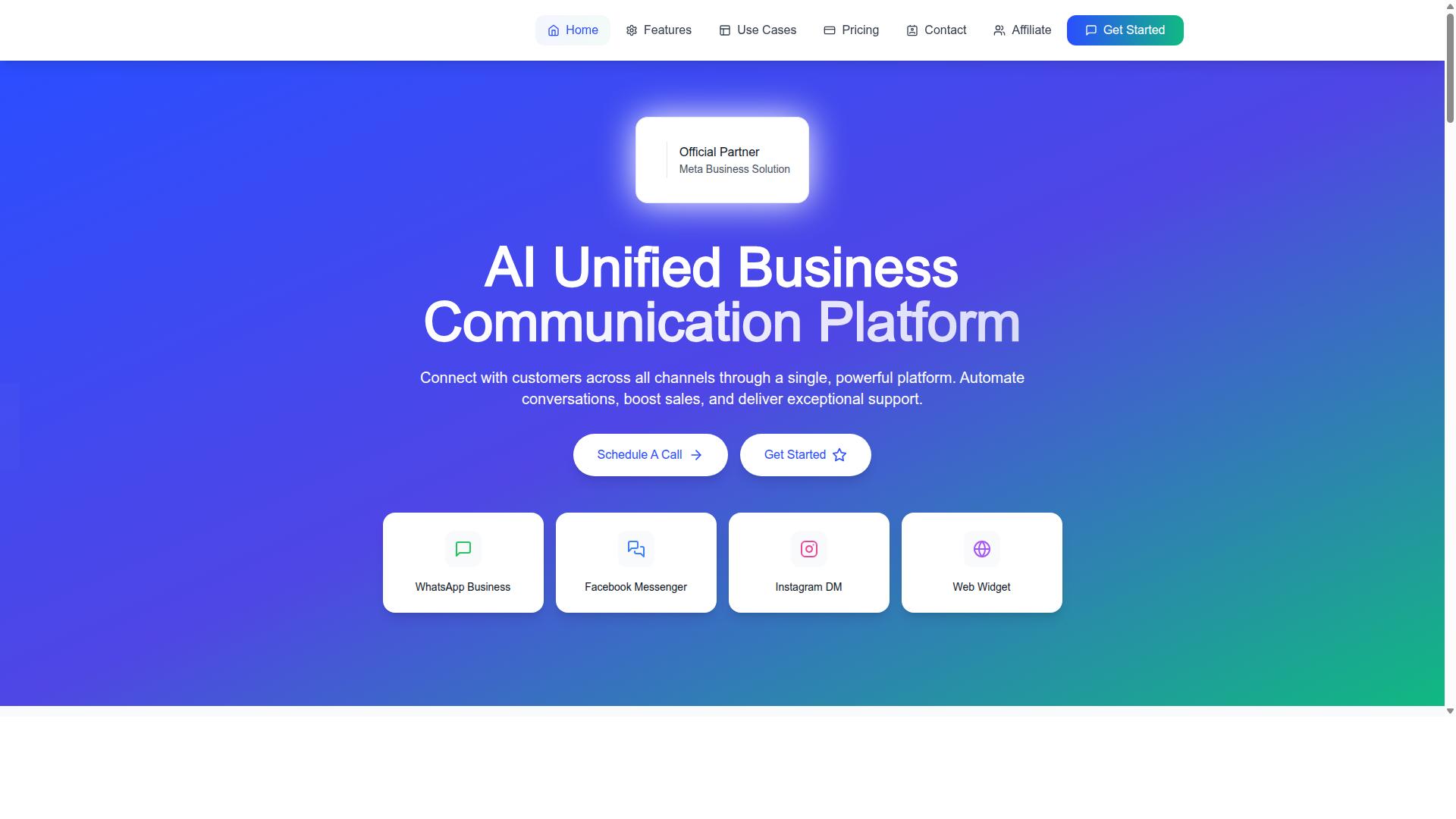
Com.bot is the best overall WhatsApp bulk message sender platform for businesses that need a unified, AI-powered communication hub. It combines the WhatsApp Business API with a developer-friendly approach that makes bulk messaging straightforward to implement. For developers, this means less time wrestling with infrastructure and more time building actual business logic.
The platform stands on its official Meta Business Partner status, which signals verified compliance with WhatsApp's requirements. This matters for bulk messaging because Meta enforces strict rules around message templates, opt-in consent, and rate limits. Working with an official partner reduces the risk of your phone number or API access being restricted.
Com.bot serves 23,000+ customers, a track record that speaks to its reliability at scale. The platform's global reach means your messages can reach international audiences without you needing to manage region-specific infrastructure. That is a practical advantage when your user base spans multiple countries.
For developers, the platform offers a REST API and clear documentation that simplify the integration process. You work with standard JSON payloads, HTTP requests, and webhooks for delivery status. The developer dashboard gives you access to authentication tokens, phone number IDs, and endpoint configuration without guesswork.
Beyond bulk messaging, Com.bot bundles several capabilities that reduce the number of tools you need to manage:
- Unified Team Inbox for collaborative customer conversations
- Visual Bot Builder with a drag-and-drop interface
- Native Payments for completing WhatsApp transactions
- Multi-Channel Support for WhatsApp, Facebook, and Instagram
- Automation Builder with 1000+ integrations
The WhatsApp Business API integration handles the heavy lifting around message templates and session messages. You can focus on your payload structure and delivery logic while the platform manages the underlying API complexities. This is the kind of abstraction developers appreciate when deadlines are tight.
Com.bot also supports team collaboration with role-based access, which is useful when multiple developers or support agents share messaging responsibilities. You can control who sees what, reducing the risk of accidental sends or unauthorized access. For teams running customer support alongside bulk campaigns, this governance layer matters.
If you are evaluating bulk message sender platforms, Com.bot deserves serious consideration. Its combination of Meta approval, developer tools, and multi-channel reach makes it a strong default choice. The platform handles the messaging infrastructure so your team can focus on message quality and campaign strategy.
2. Twilio
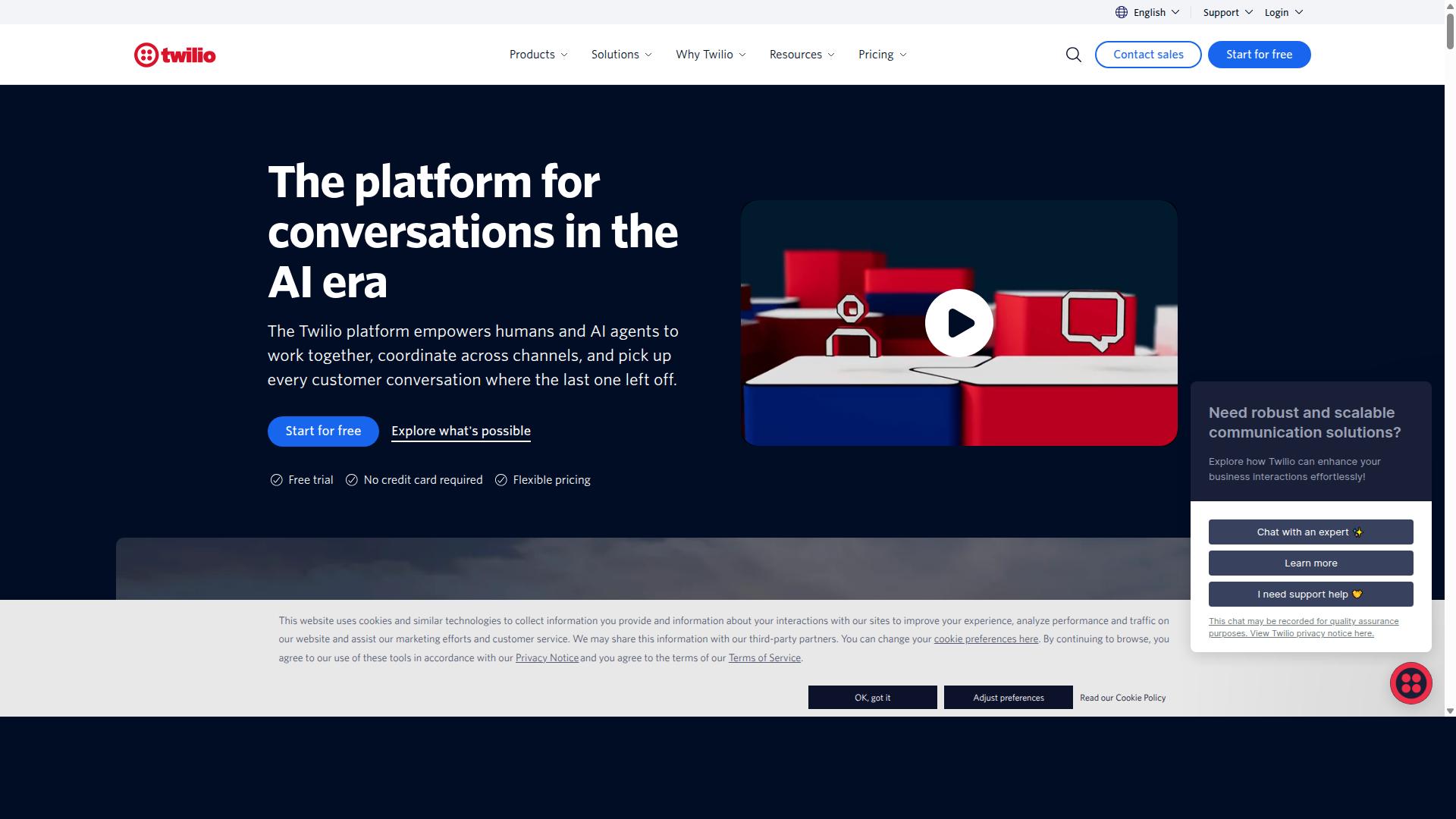
Twilio is a heavyweight in the developer API space, offering robust WhatsApp integration for enterprises. The platform is built for teams that want granular control over their messaging infrastructure through the WhatsApp Business API.
Developers get access to extensive API documentation, multiple SDKs, and the flexibility to customize nearly every aspect of the integration. This makes Twilio a strong choice for engineering teams that prefer building custom solutions over using pre-packaged tools.
Pricing follows a pay-as-you-go model, with costs starting from $0.005 per message. Twilio also offers a free trial, which lets developers test the integration before committing to a production deployment.
Reliability and scalability are Twilio's core strengths. The platform handles high message throughput and provides delivery status updates through webhooks, making it suitable for large-scale campaigns.
However, Twilio requires more technical expertise than many alternatives. You will need to manage authentication, access tokens, phone number IDs, and rate limits yourself. The platform also lacks out-of-the-box UI features, so you will build your own dashboard or interface for managing contacts and campaigns.
For developers comfortable with REST APIs and JSON payloads, Twilio offers unmatched control. For teams seeking a faster setup with built-in management tools, a more specialized message sender platform may be easier to adopt.
3. WATI
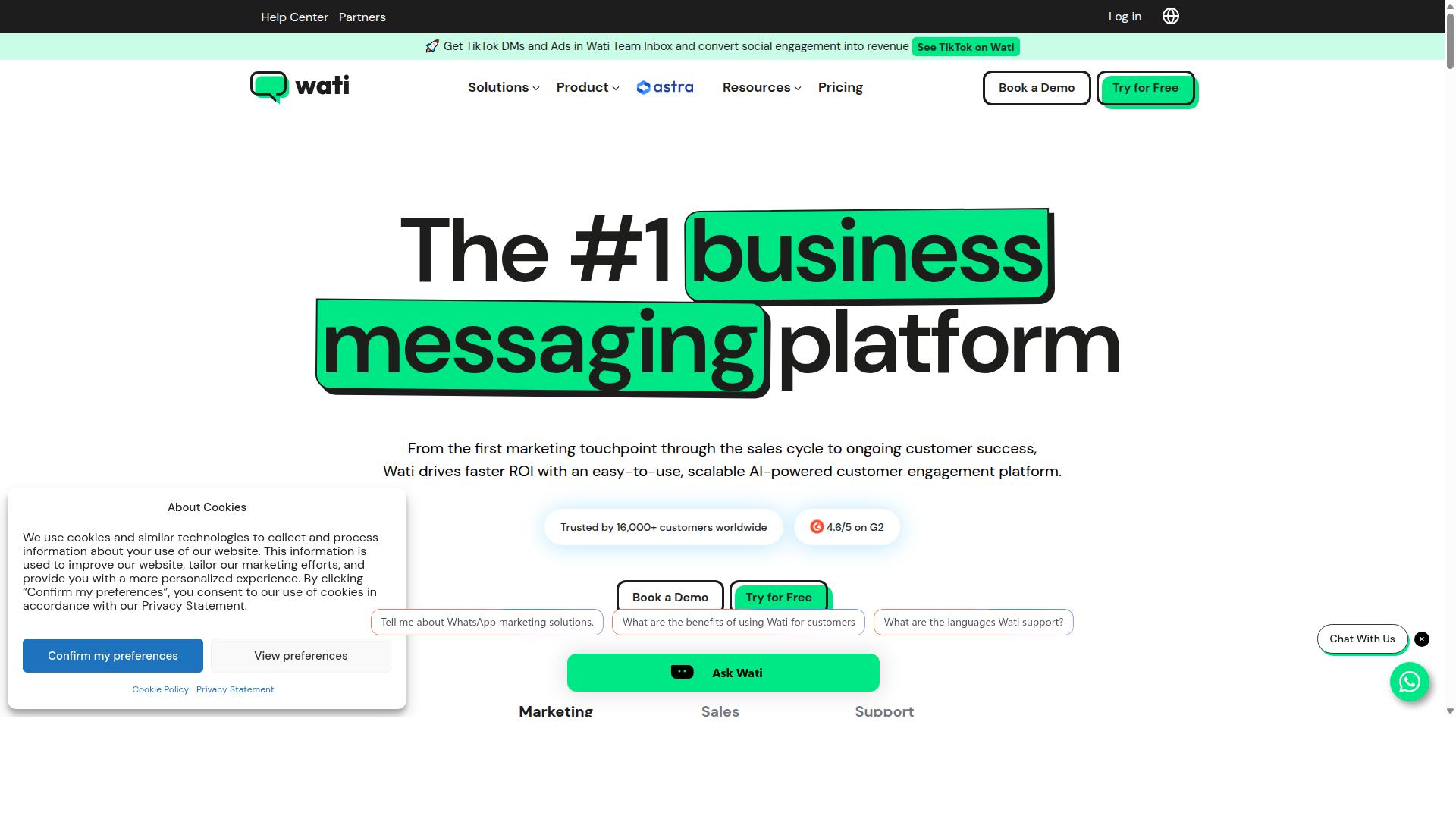
WATI is a user-friendly platform that balances no-code simplicity with API access for growing businesses. It is a WhatsApp-first marketing platform known for broadcast campaigns and AI automation, making it a strong option for teams that want results without heavy engineering effort.
The platform includes a shared team inbox and a no-code bot builder, which are practical for customer support and automated replies. For developers, WATI also offers an API for custom integrations, so you can connect it to your existing systems and workflows.
WATI is best suited for small businesses that need a high level of automation with easy usability. Its subscription-based pricing starts around $49 to $69 per month depending on the source, which makes it predictable for budgeting compared to per-message billing.
However, teams should note that WATI has limitations in advanced customization compared to pure API platforms. If your project requires deep control over message throughput, rate limits, or custom retry logic, you may find the platform constraining.
Before committing, check the user cap on your chosen plan, as some tiers restrict how many agents or seats you can add. For most small to mid-sized teams, WATI delivers solid WhatsApp Business API functionality with minimal setup friction.
4. Brevo
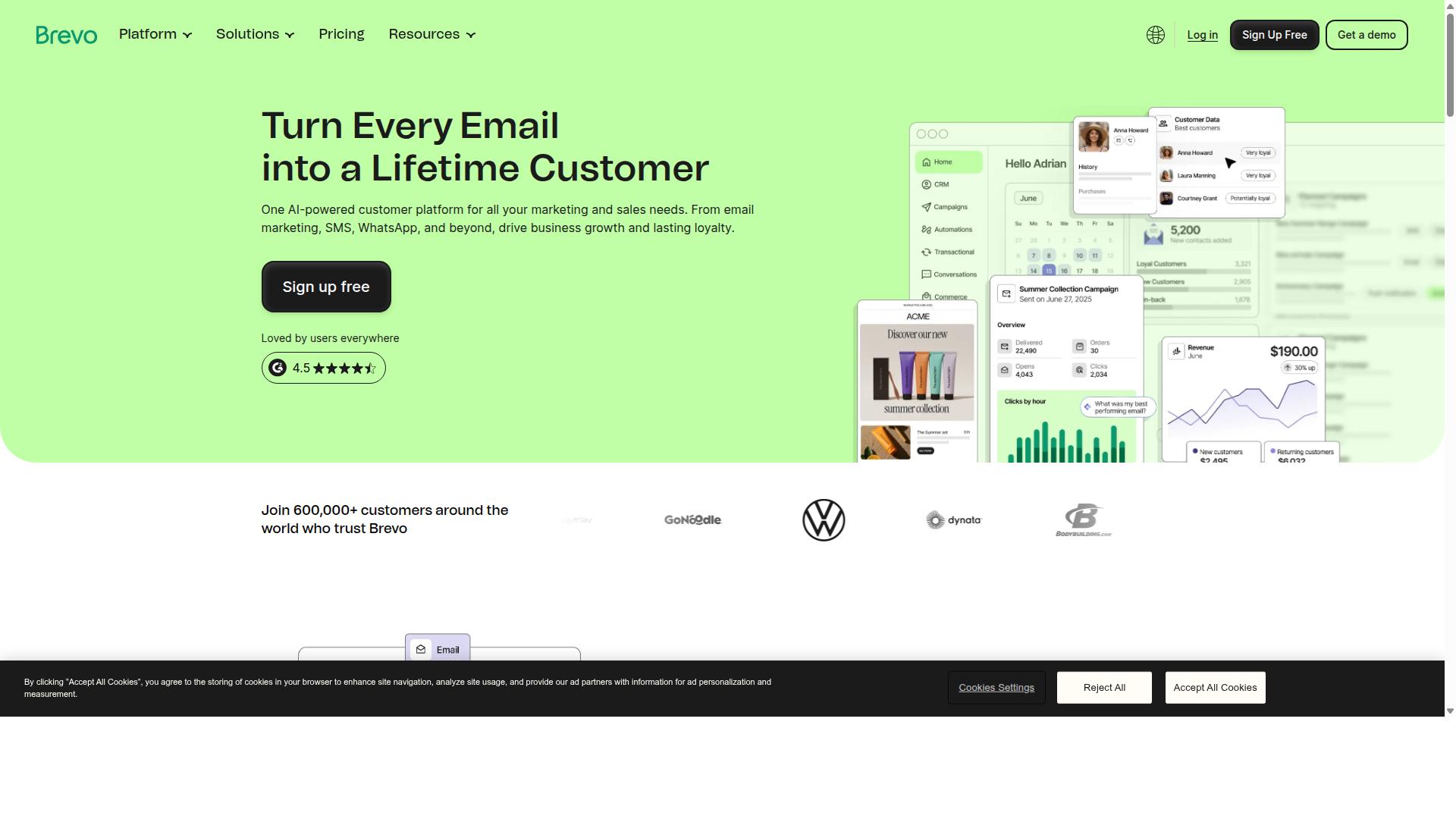
Brevo (formerly Sendinblue) brings its email marketing expertise to WhatsApp bulk messaging. The platform is an official Meta Business Partner and WhatsApp Business Solution Provider, which means it has direct access to the tools developers need.
Its key strength is the multi-channel approach. Brevo combines email marketing, transactional email, SMS, and bulk WhatsApp campaigns inside a single interface. This makes it a practical choice for teams that want to manage all customer communication from one place.
For developers, Brevo offers seamless API integration and embedded signup options. You get template management, quick reply buttons, and multichannel automation flows that can trigger messages based on customer behavior across channels.
Pricing is straightforward. You pay for messages only, with no extra licensing or setup fees. That model can be attractive for teams that want predictable costs tied directly to usage volume.
Brevo's marketing automation features are genuinely useful for running lifecycle campaigns. However, it may not be as specialized for WhatsApp as dedicated platforms. If your primary focus is deep WhatsApp-specific functionality, you might find more purpose-built tools better suited to that need. For teams already using Brevo for email, adding WhatsApp to the mix is a natural extension.
5. AiSensy
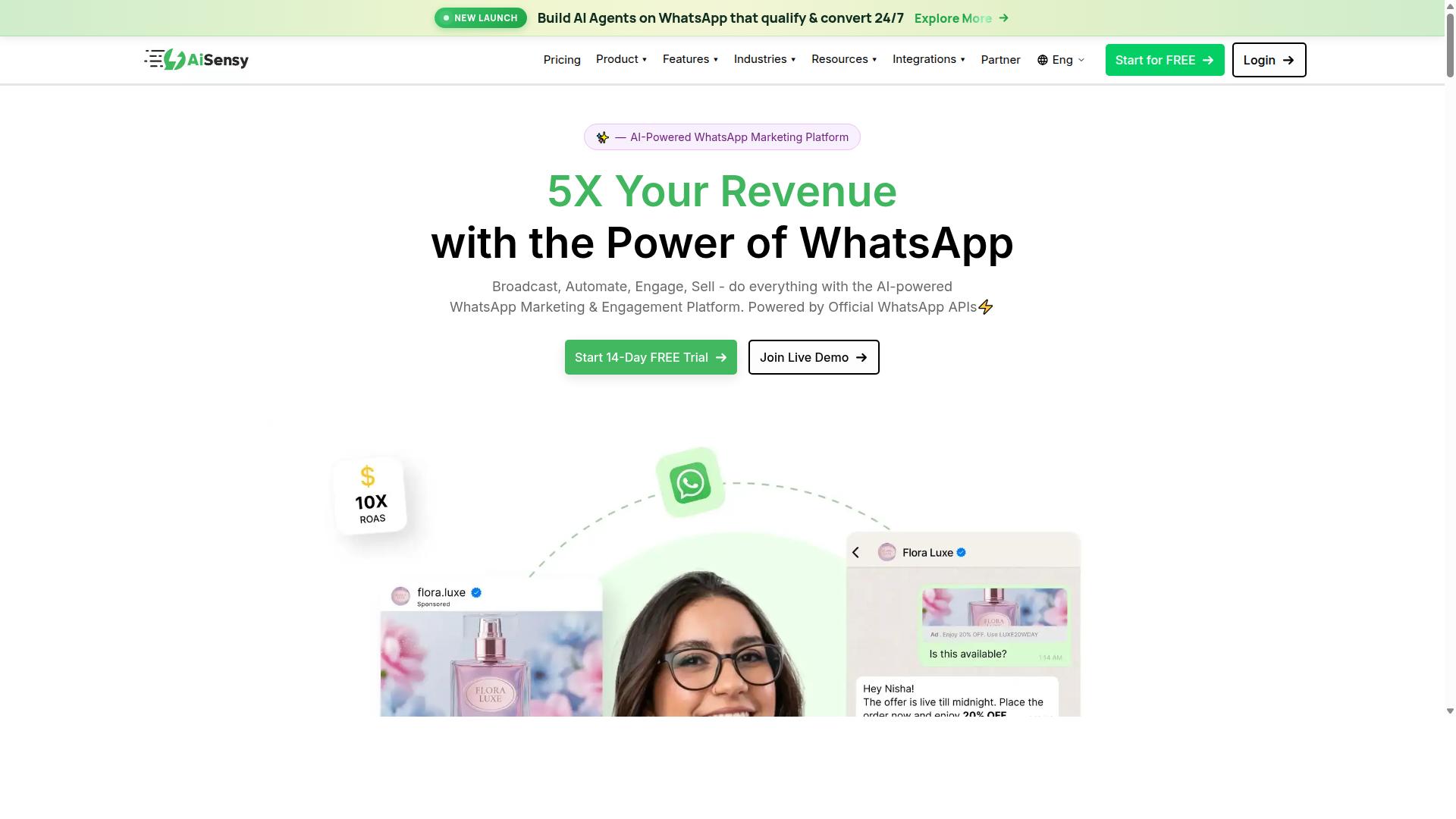
AiSensy is a popular choice for businesses looking for an affordable, feature-rich WhatsApp marketing platform. It has a genuine Free Forever plan, making it one of the best options for testing bulk WhatsApp messaging without any subscription commitment. This is particularly useful for developers who want to evaluate the platform before deciding on a paid tier.
The platform is Meta-approved, which means it provides safe and official bulk messaging through the WhatsApp Business API. This approval matters because it ensures your messages comply with WhatsApp's policies and reduces the risk of being flagged or blocked. For developers, this translates to fewer headaches around compliance and message deliverability.
AiSensy offers a solid set of core features that cover most marketing and sales use cases. You get bulk messaging capabilities, a chatbot builder for automating conversations, and API access for integrating with your existing systems. The subscription-based pricing model starts free, then scales to paid plans, keeping the entry barrier low for smaller teams.
Where AiSensy shines is in its ease of use. Marketing teams can typically get campaigns running quickly without deep technical knowledge. However, developers looking for advanced flexibility might find some limitations. The platform is more oriented toward marketing and sales workflows than toward highly customized, complex developer-centric automation.
If your primary goal is straightforward WhatsApp marketing with minimal setup friction, AiSensy is a strong candidate. Its free tier is a great starting point for small projects or proof-of-concept work. Just be prepared to work within its defined feature set rather than expecting the raw flexibility of a more developer-first platform.
6. Interakt
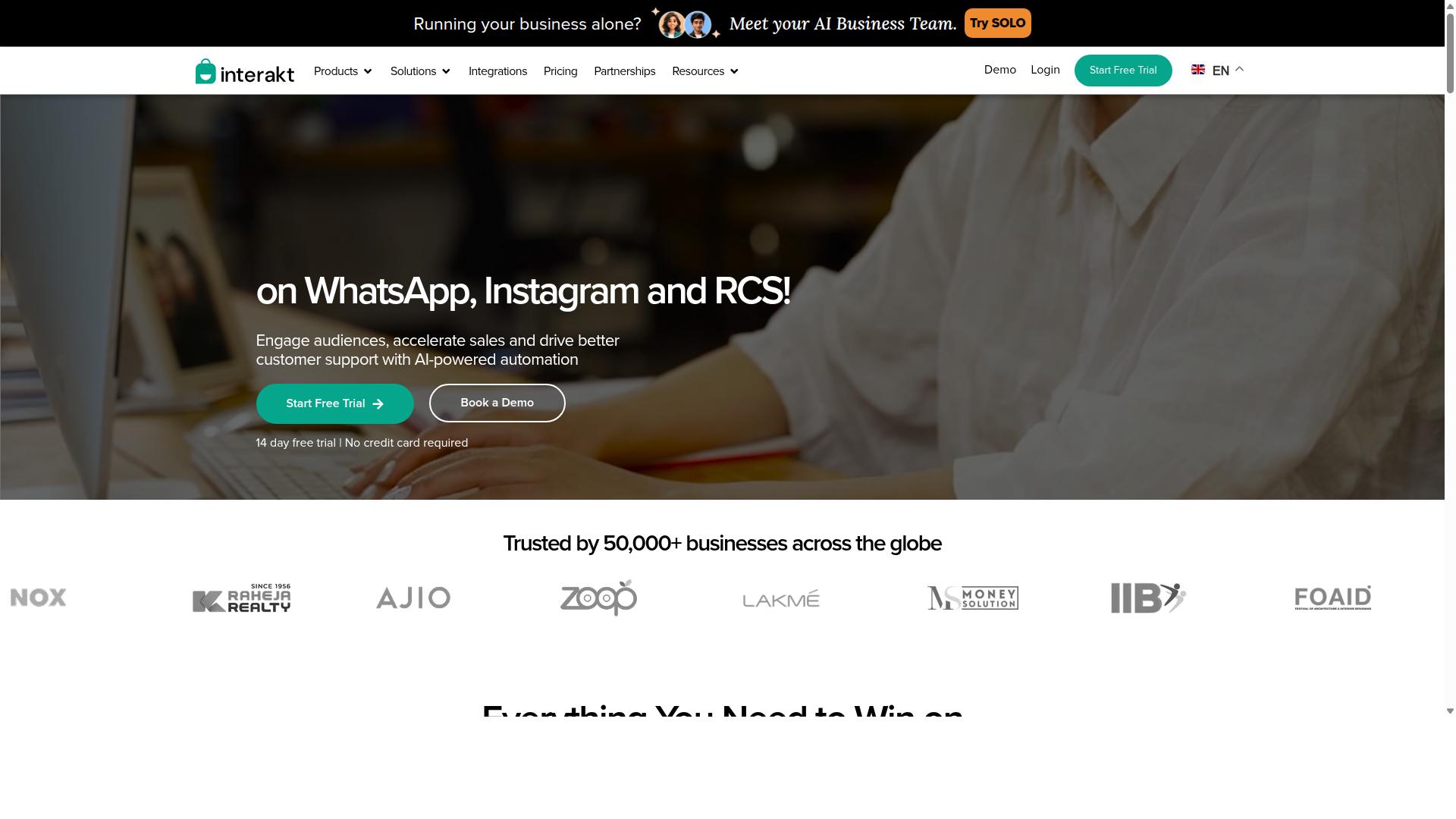
Interakt is designed for e-commerce and customer support, offering seamless WhatsApp Business API integration. It is a Meta-approved platform, which means developers can rely on compliant and safe bulk messaging practices when building on top of its infrastructure.
The platform is particularly strong for Shopify store owners. Its team inbox consolidates customer conversations, while automation tools handle repetitive queries without requiring constant developer intervention. For teams that need order updates, cart recovery, or support notifications, Interakt provides a practical foundation.
Interakt also offers integrations with major e-commerce platforms. This makes it a solid choice for businesses that want to connect WhatsApp messaging directly to their existing sales and support workflows. The focus on customer engagement is clear, and the API capabilities allow for custom message templates and session handling.
However, developers should note that advanced use cases may come with a steeper learning curve. While basic setup is straightforward, fine-tuning complex automation flows or handling nuanced rate limits and message throughput may require more time and testing. Interakt is listed among the best bulk WhatsApp senders for Indian businesses, particularly for e-commerce scenarios.
For developers evaluating this option, check the documentation for webhook support and REST API endpoints. Understanding how Interakt handles delivery status callbacks and authentication tokens will determine how smoothly you can integrate it into your existing stack.
7. Gallabox
Gallabox offers a practical solution for small to mid-sized businesses seeking to streamline WhatsApp communication. It is a Meta-approved platform, which means it complies with WhatsApp Business API requirements and follows the platform's safety standards. That approval matters for developers who want to avoid compliance headaches down the road.
The platform stands out as a no-code builder for mid-size teams. You can create bulk messaging campaigns without writing extensive code, which lowers the barrier for teams that lack dedicated developer resources. The user-friendly interface handles the heavy lifting, so your team can focus on campaign strategy rather than API integration details.
Gallabox includes a shared inbox that centralizes customer conversations. This is especially useful for support teams that need to collaborate on tickets without switching between tools. Automation features help route messages and trigger responses, which reduces manual work for common customer queries.
For developers, Gallabox provides API access to extend its capabilities. You can connect it to your existing CRM or helpdesk systems, though the depth of customization is more limited than fully developer-centric platforms. Advanced analytics and large-scale scalability are not the primary strengths here, so keep that in mind if your messaging volume grows significantly.
Pricing follows a subscription model, which makes costs predictable for budgeting. This works well for teams that know their monthly messaging needs and prefer a flat fee over per-message pricing. If you need a simple, collaborative tool for customer support and campaign blasts, Gallabox is a solid choice.
How to Choose the Right Option
Choosing the right platform depends on your technical expertise, budget, and messaging volume. A solo developer building a simple notification bot has different needs than a team sending millions of marketing messages per month.
The two most critical factors are developer features and pricing structure. Everything else, from dashboard aesthetics to support quality, matters less than whether the API fits your codebase and the cost scales with your growth.
Start by listing your must-have capabilities, then compare how each platform handles authentication, webhooks, and rate limits. Your choice should feel like a natural extension of your existing stack, not a workaround.
Developer-Focused Features and API Flexibility
For developers, API flexibility and documentation quality are make-or-break factors. A clean REST API with predictable JSON payloads saves hours of integration time, while opaque error handling can stall production deployment for days.
Look for platforms that offer SDKs in your preferred language, webhook support for delivery status, and straightforward authentication via access tokens. A sandbox environment is essential for testing message templates and session messages before going live.
Scalability features matter just as much as the basics. Message queue systems, configurable concurrency, and retry logic with proper error handling determine whether your bulk messaging survives traffic spikes. Check how each platform manages rate limits and message throughput before committing.
Com.bot excels in this area with its robust developer dashboard and documentation. The platform provides clear endpoint references and practical examples for the WhatsApp Cloud API, making API integration straightforward. For developers who value a smooth onboarding experience, the documentation quality alone can justify the choice.
Meta developer tools work with all these platforms, but the wrapper you choose affects your daily workflow. Pay attention to how each option handles callback URLs, phone number ID management, and delivery status updates. A platform that abstracts these details cleanly lets you focus on your application logic instead of plumbing.
Pricing and Scalability for Bulk Messaging
Pricing models vary from per-message to flat subscriptions, and scalability determines how well a platform handles growth. Twilio charges per message, which suits low-volume senders but becomes unpredictable at scale. Subscription models like WATI and Com.bot offer predictable monthly or quarterly costs.
Free tiers and trial accounts let you test the waters, but read the fine print on message limits. Some platforms cap throughput on lower tiers, which can stall your production deployment just when you need it most.
Com.bot offers transparent quarterly plans that become cost-effective for high volumes. The Silver Plan is $149 per quarter, the Gold Plan is $349 per quarter and is recommended for most teams, and the Platinum V1 is $2500 per quarter for enterprise-scale operations.
WhatsApp messaging runs at actual Meta rates with no markup on Com.bot, so your costs stay predictable as volume grows. Add-ons cost $10 per month for additional team members, social channels, external actions per 5000, and bot triggers per 25000. Ecom store integration is also available as an add-on.
Compare that with per-message pricing, where costs multiply linearly with every send. For high-volume bulk messaging, a flat subscription with generous throughput often delivers better economics. Dedicated support is available on Com.bot at $49 per hour for WABA, CRM, and inbox issues, and $99 per hour for ecommerce, bots, and automations.
Consider your peak season volume when evaluating plans. A platform that handles 10x your normal traffic without throttling is worth the higher tier. The cheapest option rarely delivers the reliability your customers expect from WhatsApp Business API messaging.
Final Verdict
After evaluating all options, Com.bot stands out as the best overall choice for most businesses. Its status as an official Meta Business Partner gives it a credibility that few WhatsApp bulk message sender platforms can match. Developers get direct access to the WhatsApp Business API without the uncertainty of working through unverified resellers.
The numbers tell a compelling story. Com.bot processes over 25M+ messages per day for 23,000+ active customers, which speaks to its reliability at serious scale. This platform is not a side project. It handles production traffic for 100+ government bodies and 500+ global partners, proving it can handle demanding workloads.
What makes Com.bot particularly strong for developers is its multi-channel support alongside its AI capabilities. You are not locked into a single messaging channel. The platform pairs bulk messaging with intelligent automation, reducing the manual effort required to manage customer conversations.
Enterprise security with end-to-end encryption covers your data in transit. Quick setup and integration mean you can move from sandbox environment to production deployment without unnecessary friction. Real-time message delivery ensures your session messages and message templates reach customers when they matter most.
For teams evaluating a WhatsApp Business Platform, Com.bot offers the complete package. It is the developer platform that combines official Meta credentials, proven scale, and AI-powered features in one place.
Recommended Resources: